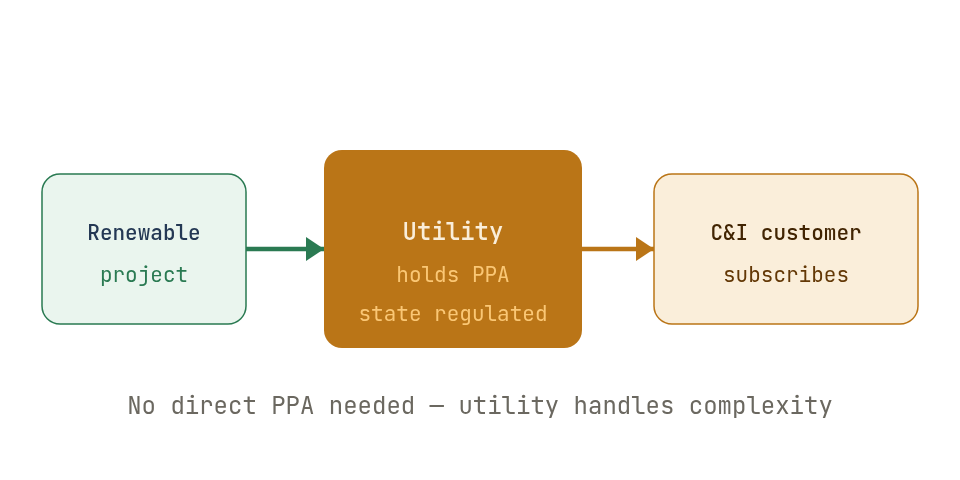
Green tariffs
Utility programs that let C&I buyers go renewable without a direct PPA — how they work, what they deliver, and when they make sense.
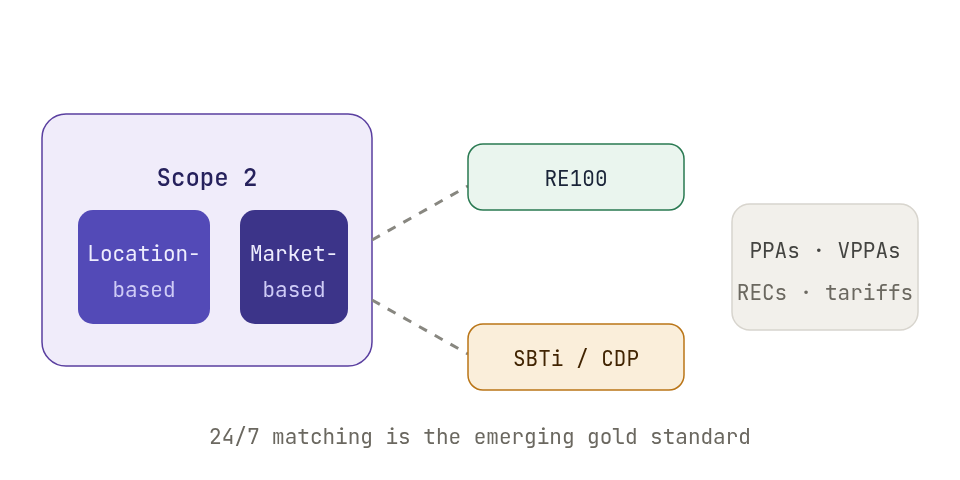
Sustainability reporting & energy
Scope 2 emissions, market-based vs. location-based accounting, RE100, CDP, SBTi, and what quality of renewable procurement actually matters.
Virtual PPA (VPPA)
A financial contract, also called a contract for differences, where a corporate buyer agrees to pay a fixed price for renewable energy and receives the flo...
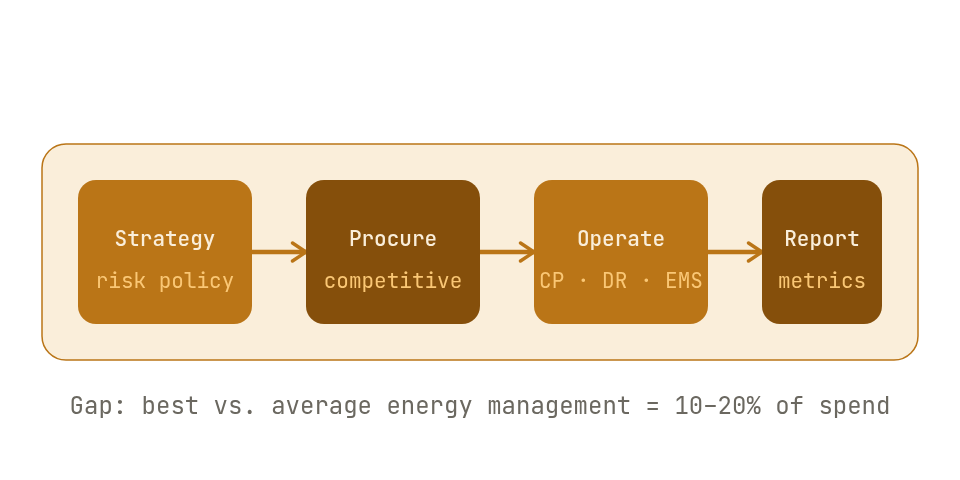
Corporate energy procurement
How large companies structure their energy function — from strategy and risk policy to multi-site portfolio management.
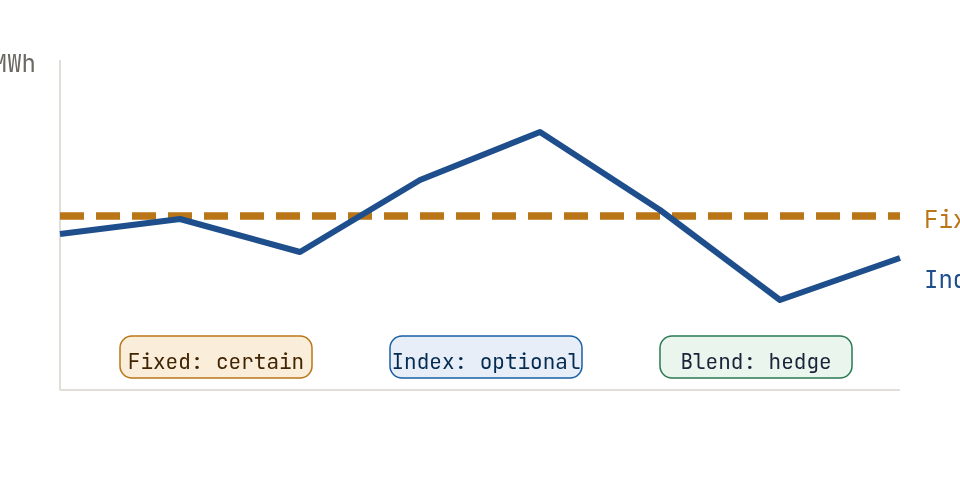
Fixed vs. index pricing
When to lock in a fixed price and when to ride the index — the foundational procurement decision every large energy buyer faces.
Power purchase agreement (PPA)
A long-term contract to buy electricity directly from a generator, typically a renewable energy project, at a fixed or indexed price over 10–25 years. Phys...
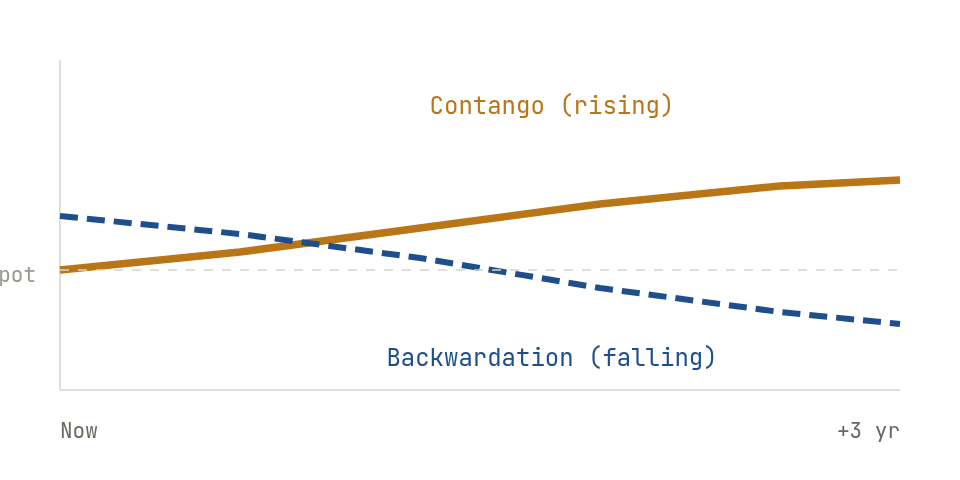
The energy forward curve
How to read the forward curve, what contango and backwardation mean, and how to use it in procurement timing decisions.
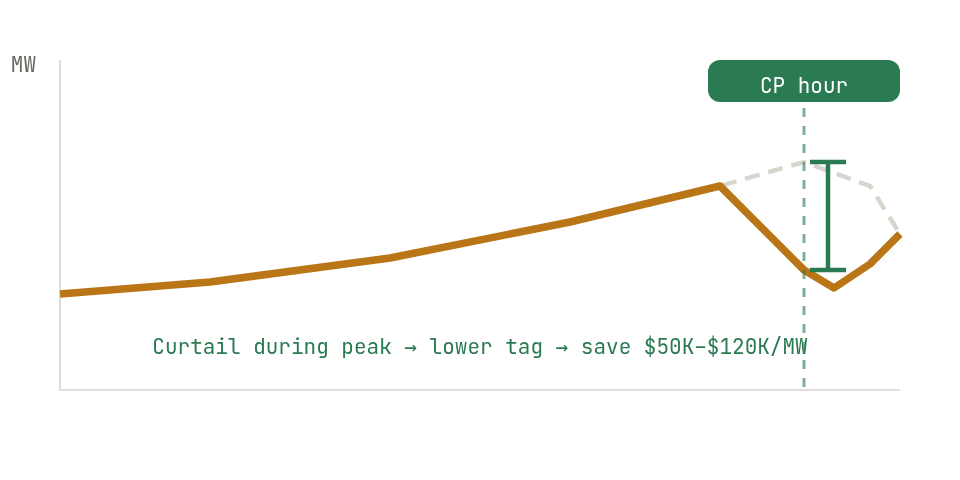
Coincident peak management
How to reduce your capacity tag, lower your bill structurally, and build a peak response program that delivers savings year after year.
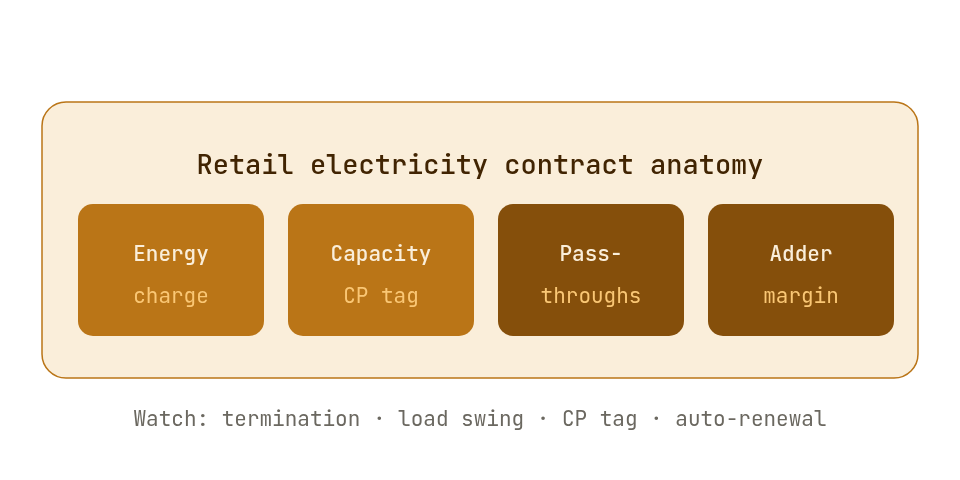
Retail electricity contracts
What is in your electricity contract, what to negotiate, and where large C&I buyers most commonly leave money on the table.
Offtake agreement
A contract committing a buyer to purchase output from a project — most commonly used in power purchase agreements where a corporate buyer or utility commit...
Forward curve
The market's current expectation of future electricity prices, expressed as a price for each future delivery month or year. Energy buyers use the forward c...
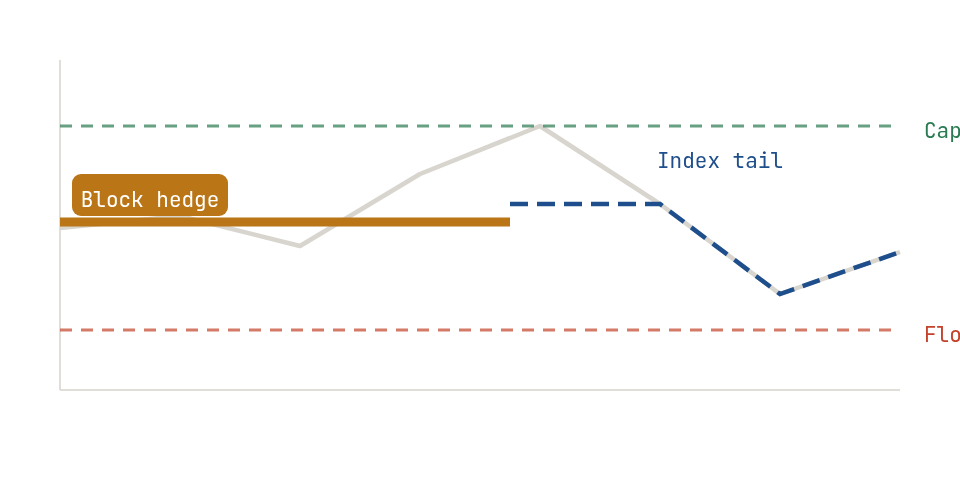
Energy hedging strategies
Block hedges, strips, collars, and options — how large energy buyers manage electricity price risk across a portfolio.
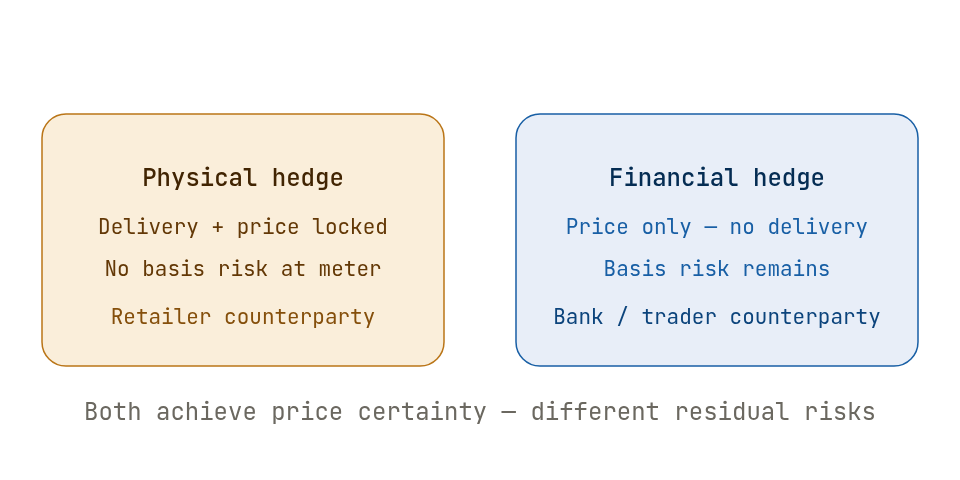
Physical vs. financial hedges
The structural distinction between locking in electricity delivery and locking in price — and why basis risk is the key difference.