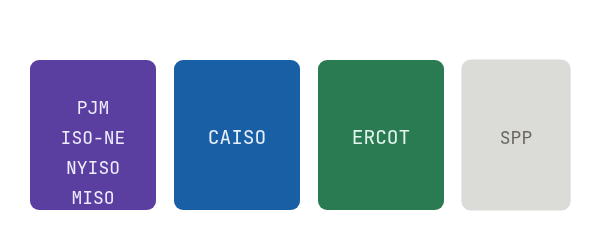
Resource adequacy frameworks
Four different approaches to ensuring enough generation: capacity markets, bilateral RA, and ERCOT's energy-only.
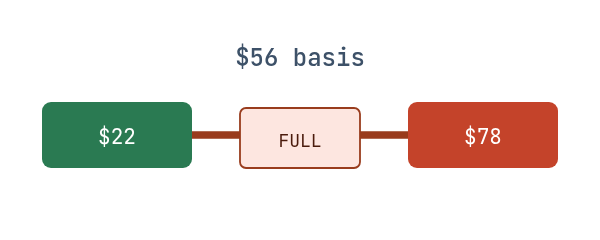
Transmission & congestion
Why LMPs vary across short distances, how constraints create basis spreads, and what grid-enhancing technologies can do.
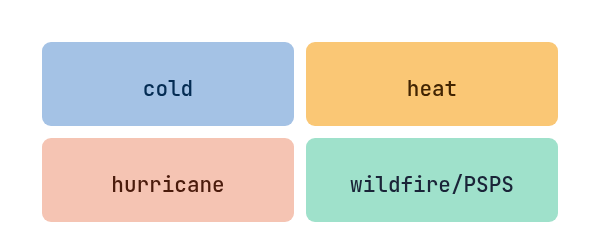
Weather & grid risk
Winter Storm Uri, CAISO Heat Dome, hurricane Beryl, and PSPS — how extreme weather tests the grid.
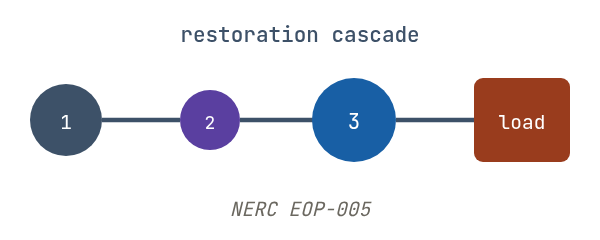
Black start & resilience
How operators rebuild a grid after a complete blackout — which generators can self-start and the cranking path.
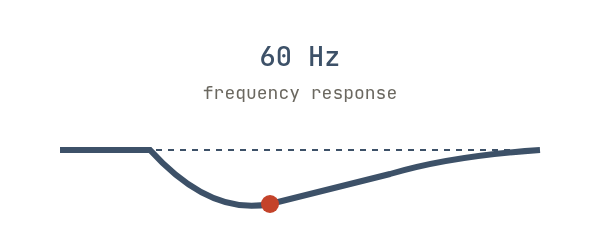
How the grid stays balanced
Frequency, inertia, AGC, and the reserve products that keep supply matched to demand every second.
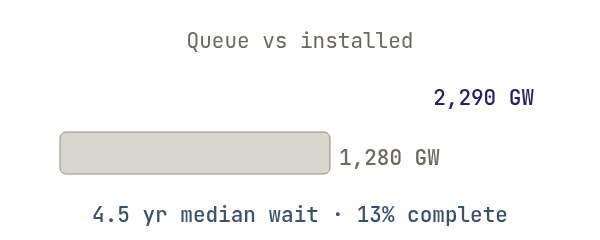
The interconnection queue
More generation in the queue than is installed in the entire US fleet — but only 13% will be built.
Spinning reserve
Generation capacity that is already online and synchronized to the grid but not fully loaded — available to ramp up within 10 minutes to respond to a sudde...
Ancillary services
Services that support the reliable operation of the grid beyond energy supply — including frequency regulation, spinning reserves, non-spinning reserves, a...
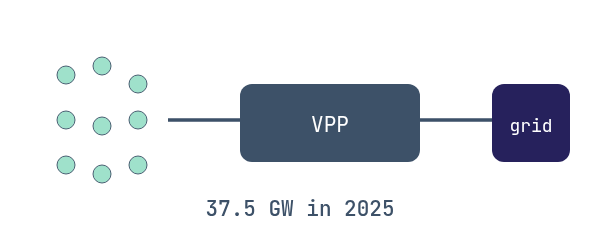
Virtual power plants
Software-coordinated aggregations of DERs operating as a single dispatchable resource. Now 37.5 GW in North America.
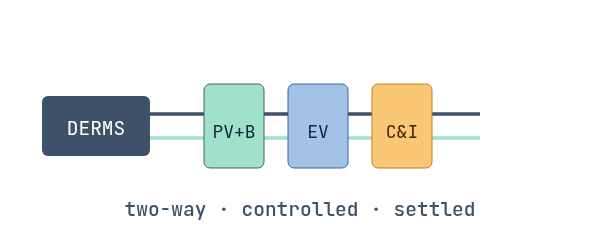
Distribution flexibility
DERMS, hosting capacity, and non-wires alternatives — how utilities manage rooftop solar, batteries, EVs at the grid edge.
Virtual power plant (VPP)
A software-aggregated portfolio of distributed energy resources — batteries, solar, EVs, smart loads — that is coordinated to behave like a single dispatch...
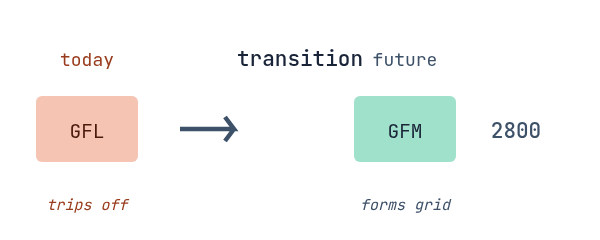
Grid-forming inverters
The power electronics revolution replacing synchronous inertia. How GFM inverters differ from GFL and why the transition matters.
Curtailment
The deliberate reduction of output from a generator — often renewables — when supply exceeds demand or transmission capacity is constrained. Curtailment is...
Duck curve
A graph of net load (total demand minus renewable generation) over the course of a day that resembles a duck. Most pronounced in high-solar markets like CA...